What the dancers are doing
Irish dance styles explained
Hard shoe, soft shoe, ceili and sean-nos: a plain guide to the Irish dance styles you may meet at a hooley and what to watch for.
Reserve a table for the hooley ↗Quick answer
Irish dance covers solo and group dances, from the fast stage style made famous by Riverdance to relaxed social dances. Solo dances split into hard shoe, which makes a drumming sound, and soft shoe, which is lighter. Ceili dances are for groups, and sean-nos is an older, improvised style. At a hooley, expect mostly the polished stage style.
One name, many dances
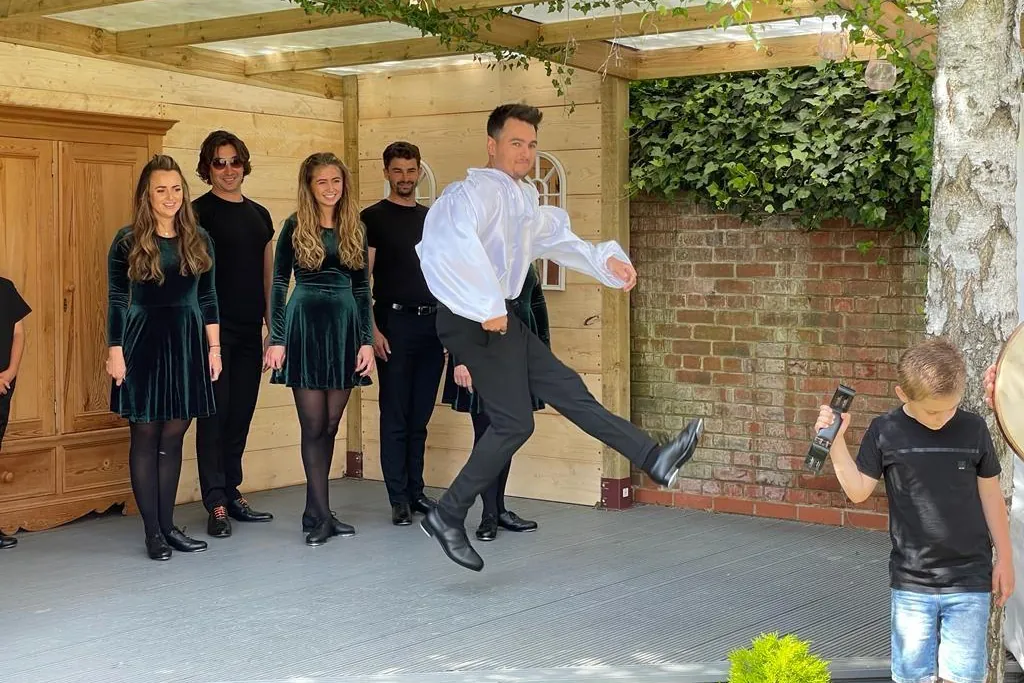
Irish dance means the traditional dance forms of Ireland, danced alone, in groups and socially. Travelling dance masters taught it across Ireland in the 17th and 18th centuries, and different forms grew up in different places. From the early 20th century, organisations codified the dances and set up competitions. Stage shows later reshaped it again. The dancing at a hooley draws on this long history, so you can read the evening as several traditions in one. Competitions, called feiseanna, take their name from feis, the Irish word for festival.
Hard shoe and soft shoe
Solo dances fall into two groups by footwear. Hard shoes have bulky tips and heels, once wood or leather with nails and now often fibreglass, which make the loud drumming rhythm. Soft shoes are light leather, close to ballet slippers, and the dances in them are flowing and springy. If you hear a clatter that fills the room, you are listening to hard shoe. The sound is part of the show, so listen as well as watch.
Reels, jigs and hornpipes
The common dance types take their names from the music. Soft-shoe dances include the reel, the slip jig and the light jig. Hard-shoe dances include the hornpipe, the treble jig and the treble reel, plus the traditional sets, each with its own set tune and steps. The names matter little in a show, but they point to the music: the dance is built on the tune, so the tune's character shapes the steps.
Where the stage style comes from
The style most visitors recognise, with a rigid upper body, arms by the sides and fast, precise footwork, grew from the Gaelic League's work from the late 19th century to preserve and promote Irish dance. Riverdance, which began as an interval act at the Eurovision Song Contest in 1994, carried it to a worldwide audience. The shows it inspired added choreography, lighting and costume, which is why a hooley's dance set can feel like theatre as well as tradition.
Ceili and set dancing
Ceili dances are group dances, from two to sixteen people, built around formations and figures with simple footwork. A céilí was originally a social visit or gathering, and the word comes from an Old Irish word for companion. Set dancing, for groups of four, is a social tradition that borrows elements of step dancing. These are the dances where the audience can join in at a party, though whether a given hooley invites you up is the performers' choice on the night.
Sean-nos, the old style
Sean-nos means old style. It is a casual, solo form with low-to-the-ground footwork, improvised steps and freely moving arms, danced in turns and driven by the music. It is less polished than stage dancing, and it is less common to see it performed as a synchronised group routine. If you ever see a dancer improvising to a tune with relaxed arms and close steps, that is the idea. It sits at the opposite end from the stage style, and both are Irish dance.
What to watch for
Watch the feet first, then the formation. In a good show the lines stay straight, the arms stay still and the sound stays in time with the band. Look for costumes with embroidered Celtic patterns, a tradition inspired by designs such as the Book of Kells. Notice how the dancers move from slower to faster tunes. The pub's own site describes its troupe as traditionally and classically trained, so expect precision rather than improvisation. In competition dances a step is danced starting on the right foot and then repeated on the left, a symmetry you may spot in the show.
Frequently asked questions
What is the difference between hard shoe and soft shoe?
Hard shoes have stiff tips and heels and make a drumming sound. Soft shoes are light leather and make dances look flowing.
Do I have to dance at a hooley?
No. At the Hooley Night you sit at a reserved table and watch. Whether the performers invite the room to join in is their choice.
Is a ceili the same as a show?
No. A ceili is a social dance gathering where people take part. A show is performed for an audience.
Sources